


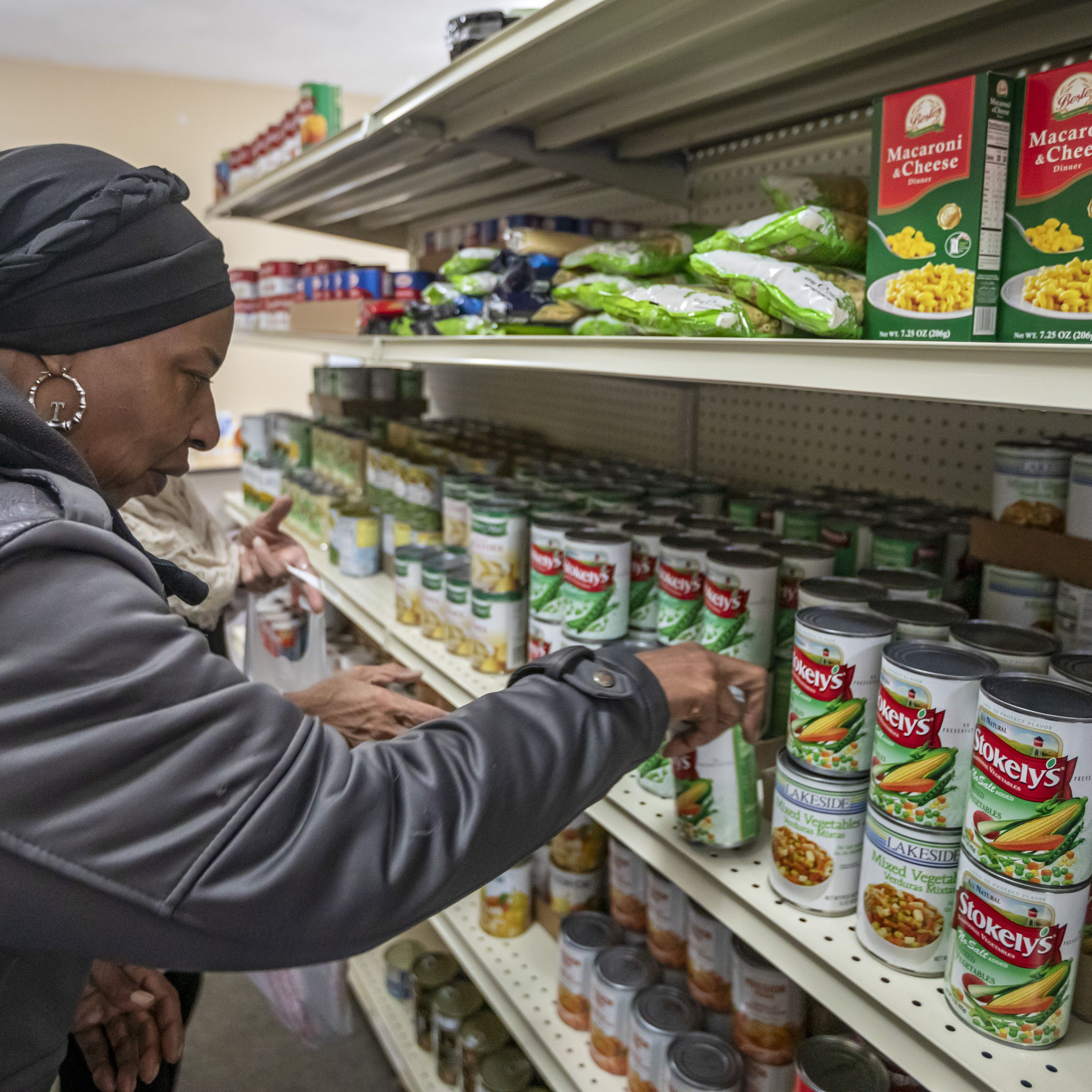
"SNAP Is The Perfect Target for MAHA."
Description
You’re listening to Burnt Toast! I’m Virginia Sole-Smith. Today, my conversation is with Rachel Cahill, a longtime anti-hunger policy advocate based in Ohio.
Rachel and her team support national and state-level organizations fighting every day to end hunger and poverty in the United States. Most of her work focuses on making SNAP (the government's Supplemental Nutrition Assistance Program) the most effective, accessible and equitable program it can be in every community.
JICYMI: When the federal government shut down this fall, it closed SNAP for the first time in the history of the program, pausing benefits for much of November. Benefits are up and running again in most places, but this has had major ripple effects on the state of hunger in our country right now. And it's led to a lot of long-term questions about what we do to prevent that ever happening again.
Rachel knows more about the ins and outs of SNAP, and anti-hunger advocacy, than anyone I know, so I asked her to come on the podcast to explain what's happening, and what we can do to help fight hunger.
We also talk quite a bit about how to give strategically because it is that time of year when a lot of us want to do charitable giving. Which is great! But there are good and less good ways to do that. Burnt Toast is a community of helpers, and I think this conversation will help us all be better at helping.
Join Burnt Toast!
🧈🧈🧈🧈🧈🧈🧈🧈🧈🧈🧈🧈🧈🧈
Episode 222 Transcript
Rachel
I am a SNAP advocate. That's how I think of myself. That's my identity. I live in Ohio, and I have been working on SNAP, and the food assistance programs that are connected to SNAP, for almost 20 years. I started working on it in Philly, and have now worked in a number of different states. My passion is to protect our food assistance programs that help families meet their basic needs. If we had something better than SNAP in this country, honestly, I would work on that. But because SNAP reaches 42 million Americans, and it's the best safety net we have, that's the program that I've committed to working on.
I do policy, advocacy, administrative, legislative—wherever we can fight for the program, we are doing that.
Virginia
It's incredible. I should disclose that we have a personal connection. I first met you, I guess, 20 years ago? When you were in college, you were a student of my stepmother, Mary Summers, who has also been on the podcast.
Rachel
Actually, I was a fresh out of college working in the community at the Greater Philadelphia Coalition Against Hunger. And Mary had students who she placed with us in a service learning program. Mary was one of my first and still mentors, who has supported me in lots of different ways through this career.
And I think you did some interviews with Witnesses to Hunger? I worked on that program many years ago. So yeah, we've evolved a lot, Virginia, since those days.
Virginia
Yes! When I was researching my first book, The Eating Instinct, you helped connect me with folks for interviews. Rachel and I go way back in a shared advocacy spirit, sort of way so I just wanted to give people that backstory.
And so I emailed you a few weeks ago to say, Rachel, help! Please come on the podcast. This was when the government was shut down and it had triggered the freeze on November SNAP benefits. At that point, everybody was scrambling, and I knew you were doing the most scrambling.
Of course, because of politics, the shutdown is now over. SNAP benefits are once again being distributed, for now anyway. But that is not to say that hunger has been solved in this country, or that the 42 million Americans who rely on that program are just totally okay now.
You were like, "Do you still want to have this conversation?" And I was like, well, yes, because people are still going hungry!
Rachel
Yeah, thanks for the chance to talk about this!
In the 20 years I've been working on food stamps, there has never been a moment I remember where SNAP dominated the headlines for two weeks straight. So on the one hand, I'm trying to see the silver lining in this massive drama to say it's a chance to educate everybody, including your listeners, about what the SNAP program is. It has been this quiet backbone program, running and feeding communities for almost 60, years.
And during the shutdown, SNAP essentially got used as leverage for both parties to bludgeon each other with and blame each other for starving the citizens of the United States. It's unprecedented. I feel like that's an overused word these days, but this truly has never happened before. SNAP benefits stopped going out across the entire country. And the emergency food system—the food pantries, the soup kitchens, the food banks —was never meant, or equipped, to be able to overnight replace what SNAP is is doing in the community.
Just in my home state of Ohio, we're talking about $263 million a month that goes out in SNAP benefits. No fundraiser for a food bank was ever going to come close to replacing that. It was a crisis. It was an absolute crisis that we were facing.
So starting on November 1, people's benefits were frozen. They still had to complete renewal paperwork. They still had to comply with work requirements. But people weren't getting their benefits delivered.
And then it turned into a Supreme Court battle. It went all the way up to the Supreme Court because the administration actually did have money available that they could have spent, and they were choosing not to spend it on the program that it was dedicated for.
So finally, when the shutdown ended, the benefits slowly started flowing again. We're recording this on November 25 and in a few states, all the benefits still have not gone out. So there are still families who are supposed to get their benefits maybe the beginning of November, and are still waiting.
The long-term harm of this is hard to overstate. The definition of food insecurity is not knowing where your next meal is going to come from. And we just traumatized 40 million people who did not know where their next meal was going to come from. 40 percent of SNAP recipients are children. Their bodies and brains are going to remember this trauma that they just went through, and it's going to be a long time before we can repair that harm. We need to make sure that this type of a crisis never happens again, and Congress is never in a position where they can hold SNAP benefits hostage, even in a future government shutdown.
Virginia
I've been thinking about the juggling act that this triggered for so many families. If you relied on SNAP to cover groceries, that meant you could use other income to cover childcare or pay a utility bill. So we're also going to see folks having fallen behind on other bills. Maybe they're unable to make a car payment, which then impacts their ability to get to work, to get kids to school, so many different things.
Rachel
There's a saying that poverty charges interest. You might only have gotten $200 from that SNAP benefit, which supplements your work income. But if you're now having to put a bill on a short term loan or credit card and you're paying 20 or 30 percent interest on that because you waited three weeks...How long is it going to take families to dig out of that hole? We hear all the time about utility shut-offs, all the time about evictions that get connected to a small change in household income, including the loss of SNAP benefits.
Now I will say, because we have made SNAP such a difficult system to navigate and renew benefits, even if the government never shuts down again, this uncertainty where your benefits disappear, you go to the grocery line to checkout and you find out that your benefits aren't there because of some paperwork mishap—that actually does happen a lot in families' lives. There's a lot we have to do longterm to make this a more stable program for everybody who's experiencing the instability of food insecurity. But this was certainly a crisis moment where it was hitting everybody at the same time.
Virginia
Say a little more about that. Because for those of us who are mostly just seeing headlines, it's like, Okay, the government reopened. Okay, the SNAP benefits are back. But this is a system that was already not meeting the need. So what are some other ways SNAP struggles to support families?
Rachel
First, let me just remind folks who don't know, if you've never been connected to the program: SNAP is a very modest food benefit. It is on an EBT card, like a little debit card, that is loaded every month with money for groceries. But it's the equivalent of, like, $6 a day on average. It is about as much as most people spend on a cup of coffee. It is not a generous benefit. There's a lot of misconceptions about what SNAP is. It's a very modest benefit you can only use for grocery items.
The program—for as

![[PREVIEW] Hot People Problems](https://s3.castbox.fm/be/58/d7/afefd29f8a3939fef5429ea7fd9a7cbe6a_scaled_v1_400.jpg "[PREVIEW] Hot People Problems")
![[PREVIEW] Are Standing Pants Different from Sitting Pants?](https://s3.castbox.fm/be/2c/0c/f737b964d5f27610acbbd373a16c29a78e_scaled_v1_400.jpg "[PREVIEW] Are Standing Pants Different from Sitting Pants?")
![[PREVIEW] How Much Did You Pay Your Pumpkin Stylist?](https://s3.castbox.fm/fe/3d/c0/dd8784a5450c5e085b6336501f2ac0f261_scaled_v1_400.jpg "[PREVIEW] How Much Did You Pay Your Pumpkin Stylist?")

![[PREVIEW] Can A Body Acceptance Advocate Work for Weight Watchers?](https://s3.castbox.fm/ce/6e/f2/62fdccc162b0b6bc777b5875f2c6d64cfa_scaled_v1_400.jpg "[PREVIEW] Can A Body Acceptance Advocate Work for Weight Watchers?")
![[PREVIEW] Not Trying to Be Hot 25-Year-Olds](https://s3.castbox.fm/1c/8e/70/adb41c046a3fe07dc045af139e24fdcf89_scaled_v1_400.jpg "[PREVIEW] Not Trying to Be Hot 25-Year-Olds")

![[PREVIEW] Is Back To School A Diet?](https://s3.castbox.fm/29/4e/50/fbf3f4de138a90fdd48db11f2d64935074_scaled_v1_400.jpg "[PREVIEW] Is Back To School A Diet?")

![[PREVIEW] The Mel Robbins Cult of High Fives](https://c10.patreonusercontent.com/4/patreon-media/p/post/140044903/63d8db77f7bf4ae6adc056b196ba3c37/eyJkIjo3MiwiaCI6MzAwMCwic3RyaXBfYWxwaGEiOjEsInciOjMwMDAsIndlYnAiOjB9/1.jpg?token-hash=_lgawLhrnuO4p0kAmMk8Wmg8kk1uHDzmHglZCAmOM1I%3D "[PREVIEW] The Mel Robbins Cult of High Fives")
![[PREVIEW] When Parenting Influencers Slide to the Right](https://s3.castbox.fm/1a/37/0c/e4a5f3b307c64e00ce970d9cb6eb9d171d_scaled_v1_400.jpg "[PREVIEW] When Parenting Influencers Slide to the Right")
![[PREVIEW] Those Pants Don't Deserve You](https://s3.castbox.fm/e8/55/73/160aa97d85aa018717bd9a8867a20a8572_scaled_v1_400.jpg "[PREVIEW] Those Pants Don't Deserve You")


 United States
